The Guitar 2008 Independent Film
This was the official website to promote the independent movie, The Guitar. Content on this page was gleaned from the site's archived pages, as well as from other outside sources.
Original Language: English
Runtime: 1h 35m
Release: November 7, 2008
The Guitar -Trailer
Saffron Burrows stars as Mel, a young woman in New York City who loses her boyfriend and her job and is given a devastating terminal cancer diagnosis by her doctor all on the same day. Mel's surprising response to her misfortunes includes renting a loft and the purchase of a special guitar. She always wanted to play the guitar since she was a little girl. Why not do all the things you want to do especially when you only have a short time to live. This captivating portrait of a woman's self-empowerment (including a tryst with the pizza delivery girl and the deliver man) won raves at the 2008 Sundance Film Festival.
TomatoMeter Critics 33% | Audience 55%
ABOUT THE FILM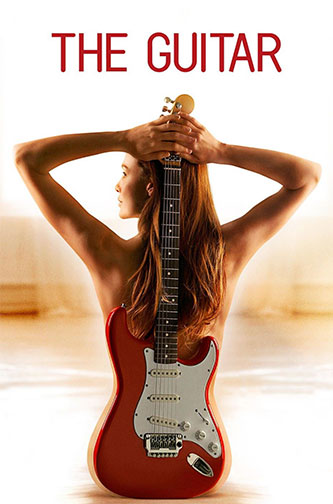
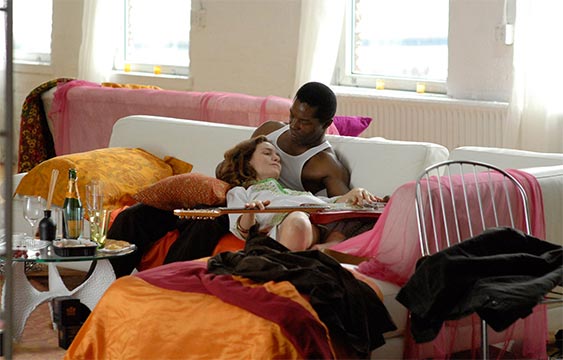
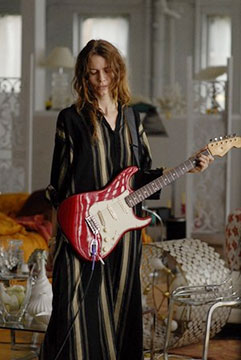
A doomed woman discovers her creative spirit during a final fling with life in this independent drama. Melody Wilder (Saffron Burrows) is already having a bad day when she visits her doctor about a troubling lump in her throat -- her boyfriend has left her, and she's lost her job. However, this news pales in comparison to what her doctor (Janeane Garofalo) has to say: the lump is an inoperable cancer, and Melody has only a short time to live. Throwing caution to the wind, Melody rents a huge, luxurious apartment and furnishes it in high style, putting her purchases on a handful of credit cards she won't be around to pay off. Melody also permits herself affairs with a few of the deliverymen who have become regular visitors to her loft, but she spends most her days alone, enjoying the trappings of wealth as she ponders what little future she has left. One day, Melody makes an impulse purchase, a red electric guitar that looks like one she wanted as a girl. While Melody isn't schooled on the instrument, she begins teaching herself to work out chord patterns and melody lines, and in the last chapter of her life discovers a way to give voice to the pain and confusion she's buried within her. Written by veteran underground filmmaker Amos Poe, The Guitar was the first feature film from director Amy Redford. ~ Mark Deming, Rovi
Rating: R (for sexual content, nudity and some language)
Genre: Drama
Directed By: Amy Redford
Written By: Amos Poe , Gillian Horvath
In Theaters: Nov 7, 2008 wide
On DVD: Feb 10, 2009
Runtime: 92 minutes
OPENING November 7, 2008 Sunshine Theatre, New York
Q& A to follow 7:15 show with Amy Redford, Saffron Burrows and Amos Poe in attendance.
OFFICIAL SELECTION
2008 Sundance Film Festival
2008 Mill Valley Film Festival
2008 Hamptons International Film Festival
CAST / THE CREW

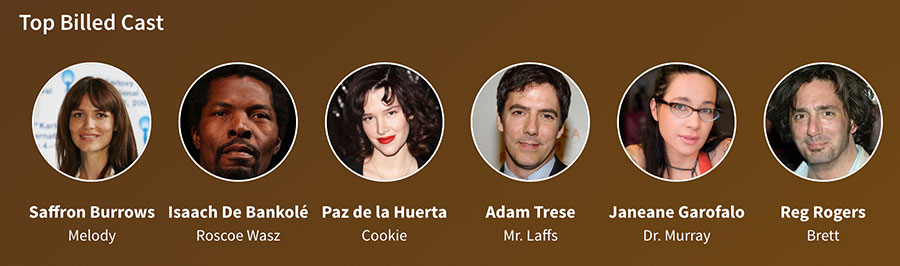
Saffron Burrows ................ Mel Wilder
Isaach De Bankolé ................ Roscoe Wasz
Paz de la Huerta ................ Cookie
Janeane Garofalo ................ Dr. Murray
Chris Bauer ................ Chief of Surgery
David Wain ................ Phone Man
Sonia Manzano ................ Lady
Ashlie Atkinson ................ Receptionist
Adam Trese ................ Mr. Laffs
Elizabeth Marvel ................ Ma Wilder
Reg Rogers ................ Brett
Lori Tan Chinn ................ Mrs. Tzu
Richard Short ................ Loser Musician
Bill Camp ................ Pa Wilder
Virginia Wing ................ Ms. Li
Lawrence Ballard ................ Another Doctor
Owen McCarthy ................ Everyothers Singer
Joel Cannon ................ Everyothers Guitar Player
Mark A. Keeton ................ Guitar Salesman
John Melville ................ Everyothers Drummer
Ben Toro ................ Everyothers Bass Player
William Leroy ................ Billy
Amitesh Manchanda ................ Punjabi Cab Driver
Mia Kucan ................ Young Mel
Rosco Wasz
Played by Isaach de Bankole
Isaach De Bankole, C'sar award-winning actor, was born on the Ivory Coast. Isaach was discovered on the streets of Paris while studying to be an airline pilot. He has a degree in Acting from Cours Simon and a Masters in Mathematics from the Universite de Paris
Melody Wilder
Played by Saffron Burrows
Saffron Burrows was born 1st January 1973 in London, England. Two political minded parents who encouraged Saffron to stand up for the things she believes in raised her. In childhood, she sold the Socialist Worker newsletter for pocket money, attended marches and rallies after school with her feminist activist mother and stepfather, joined an anti-racist group at 11, and even once shared her home with striking miners. Today, Ms. Burrows lists Maya Angelou, Adrienne Rich, Marx and Galileo as her inspirations.
Constance "Cookie" Clemente
Played by Paz de la Huerta
Born and raised in New York City, Paz de la Huerta has been acting since the age of four, having trained at the SoHo Children's Acting Studio. Aside from acting, Paz is a skilled artist, designer, and writer who enjoys listening to punk rock music. She currently resides in Tribeca, New York, with her mother and sister.
Writer / Producer
Amos Poe
Poe is one of the leading figures of the No Wave Cinema movement (75-85) that grew out of the bustling East Village music and art scene. The No Wave paralleled the punk music explosion and included Jim Jarmusch, Eric Mitchell, James Nares, Beth and Scott B, Vivienne Dick, Sara Driver, John Lurie, Richard Kern, Nick Zedd, Bette Gordon, Melvie Arslanian, Charlie Ahearn, among others - they embraced B-movie genres, the avant-garde, & the French New Wave to create a fresh, vibrant American art cinema.
Director
Amy Hart Redford
Amy Redford has just completed her directorial debut with “The Guitar”, a film written by Amos Poe and starring Saffron Burrows. In Development; “Face Value”, about the actress Hedy Lamarr, A Musical Film called “Dig” , The Untitled Eva Cassidy Story, and an internationalseries for Television.
As an actress, Currently in “Sunshine Cleaners” with Amy Adams. post-production; “First Person Singular”, directed by Sam Neave; The “Understudy” directed by Hanna Davis and David Conoly; Her other films include: “This Revolution” with Rosario Dawson, directed by Stephen Marshall; “Cry Funny Happy”, directed by Sam Neave; “Last Man Running”, directed by Damon Santostefano; “Maid In Manhattan” directed by Wayne Wang; “Strike the Tent” (a period civil war piece); “The Music Inside” (based on a true story of a halfway house for mentally ill patients in Montana, written by Michael Van Wagenen); “When I Find the Ocean” with Diane Ladd; and “Giving it Up” with Mark Feurstein.
Ms. Redford's theatre experience includes: Daisy Foote's play “Bhutan”, directed by Evan Yanoulis (Cherry Lane Studio and mainstage, New York Stage and Film); ”The Golden Ladder”; “The Messenger”; “Touch My Face”; “Stuck”; “Who Will Carry the Word”; “Hello and Goodbye”; and “The Shape of Things”. Regional Includes: “The Shape of Things” (Canadian Premier at Candy Stage),“Collected Stories”, and “Hello and Goodbye”.
Ms. Redford also co-created “Switch Track” with Yael Farber and Darrill Rosen developed at Mabou Mines and then the Sundance Playwrights Lab. Recently she appeared in Rebecca Gilman's “The Crowd You're in With” with Karen Zacharias' The “Book Club Play” at the O’Neill theatre Center. She also developed "Flo's Ho's" with Teri Lamm inspired by Julia Jordan's play of the same title for Epic Theatre Center. She directed "Watersports" at EST.
TV credits include: "Law and Order: Criminal Intent,” “Law and Order: Special Victims Unit,” “The Sopranos,” “Sex and the City,” "Dellaventura” and “Wonderland.” Amy also produced the first of a TV series called "Aperture" with the Aperture Foundation for Gallery HD, profiling contemporary photographers.
She has worked at New York Stage and Film, Williamstown Theatre Festival, the Eugene O'Neill Theatre Center, the Sundance Filmmaker and Theatre Labs, the Dorset Theatre, and the Tectonic Theatre Company.
Ms. Redford is a member of the Board of the Grand Canyon Trust. She was also on the advisory board of the IMPACT Arts festival. She did her postgraduate work at LAMDA, studied at ACT, The Actors Center, Circle Rep, CU, and earned her BA from SFSU.
CRITICS REVIEWS
November 20, 2008
Owen Gleiberman Top Critic
Entertainment Weekly
The Guitar is a lark, at best, but when Burrows' healing indulgence extends to taking on lovers of both sexes, its goofiness acquires a certain hedonistic charm.
The Guitar
Genre: Drama, Romance; Starring: Saffron Burrows, Isaach De Bankole; Director: Amy Redford; Author: Amos Poe; Release Date Limited: 11/07/2008; Runtime (in minutes): 93; MPAA Rating: R
The severely beautiful Saffron Burrows plays some sort of generic New York career woman who receives a terminal cancer diagnosis, is downsized from her job, and gets rejected by a lover — all in the same day. Good grief! To ease her agony, she rents a giant West Village loft and fills it with trendy paraphernalia, maxing out her credit cards. Amy Redford (Robert’s daughter) directed this fuzzy-headed consumerist disease-of-the-week satire. The Guitar is a lark, at best, but when Burrows’ healing indulgence extends to taking on lovers of both sexes, its goofiness acquires a certain hedonistic charm. C+
+++
November 5, 2008
Rex Reed Top Critic
New York Observer
Written by Amos Poe and directed with moxie by Amy Redford, it's the ultimate movie about optimism.
+++
November 7, 2008
Marcy Dermansky *** 1/2
About.com
I was seduced by Melody's story. Sucked in, enjoying Amy Redford's film despite myself.
A mousy young woman discovers that she has two months to live in the onset of Amy Redford's seductive fantasy/fable The Guitar. Not only has Melody (Saffron Burrows) lost her voice - an inoperable tumor is blocking her throat - and all hope for her future, but she is fired from her bad office job and dumped by her bad boyfriend. All on the same day.
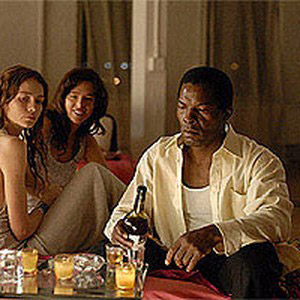
What to do? Melody walks out of her modest apartment (which looked rather appealing to this Astoria dweller) and rents an unfurnished loft. She whips out her credit cards and starts shopping: furniture, clothes, food. Price is never an objection, immediate delivery required.
My initial response to Melody's course of action was outright disgust: You are staying in New York? You are home decorating? Melody throws her clothes out the window until the arrival of her new duds. Now you're polluting?
But an amazing thing happens. Maybe it's because Melody has such good taste: she buys gorgeous clothes, beautiful furniture, great clunky boots, a pretty butterfly necklace around her delicate neck.
AUDIENCE REVIEWS
February 16, 2009
***** Ursula H
This movie just completely absorbed me! A keeper and to watch again. Subtle and tender, astute and gracious. Saffron is magnificent, with not much dialogue she could stir in me complete compassion and empathy. The observations of the school custodian and her imagined involvement with a cleaning supply salesman were totally believable, especially because of her clean obsession and the fact that Frank could provide every recyclable anti-bacterial detergent... Esthetics and Tragedy go hand in hand...a wonderful and surprising ending...and my 2 pre-teen daughters were inspired in many ways....it is directed by a young woman, Amy Redford,( daughter of....!) for women and for men who are willing to look deeper into a female soul...how candid it really is.....and those who say it is about shallow consumerism, just completely missed the point!!
+++
October 19, 2009
**** Paisit B
DVD, artistic movie with slow but interesting plot. Enjoyed the cinematography. Indeed worth seeing. recommended for serious movie goers.
+++
October 19, 2009
Ebru Y*
i read somewhere that this is the director's first movie. but unfortunately it's no good. it's far from persuasive (maybe because of the leading lady's expresionless act i don't know...) all i know is in order to cure the cancer you leave all your habits behind, try to live in luxury although u have no money (thanx to credit cards), have sex with whoever knocks on your door and - bingo- u'll be ok. itS as ridiculous as this.
the main motive of the movie is to "consume endlessly" whether it's goods or people. waste of time/waste of money.
+++
September 7, 2009
**** Ian C
I was pleasantly surprised. I saw the overly gratuitous cover while browsing the previously watched and noticed that it was a Sundance winner and at its heavily discounted price it was worth a look I felt.
The movie has a definite 'indie' feel to it and benefits from that approach. Yes it has some eroticism but it I found it compelling and quite moving. I really didn't find it boring or slow - I was hooked and need to know how this would end. Suspension of disbelief may be required at times but I can do that. There is an interesting moral to be read from her actions and from their unexpected results.
I don't do plot spoilers - you'll have to work that out yourself. I recommend it - you'll at least have a good conversation starter as you ponder what you would do in the circumstances.
I do look forward to seeing Saffron Burrows - she was quite enchanting, and this is a worthy directorial debut from Amy Redford.
+++
September 6, 2009
*** ½ Bud M
A sad but touching story about how your approach to life is altered when you realize that each day could be your last. Saffron Burrows was perfect as Melody Wild and with a cast of solid supporting.
+++
September 5, 2009
**** Joel M
Even though it is not the feel & sound good movie of the year, "The Guitar" rocks! Saffron Burrows mesmerizing performance is all the string it needs for this movie to be helmed a success. Burrows stars as Melody Wilder, a grieving New York woman who is told she has terminal throat cancer by her pessimistic doctor. Unfortunately, Melody's life tunes continue to be somber when she is downsized by her employer, and downsized by her boyfriend. Melody is about to take the suicidal route until she sees an ad for a short-term rental for a NY loft apartment. She then decides to hibernate during her last days of existence in the loft while charging all her credit cards to the max on food, furniture, and eventually The Guitar. Melody since childhood has been yearning to own & learn to play the guitar, but had never amplified (whatever that means) herself to do so until now. In the loft, Melody self teaches herself to play the guitar and all its melodies. Situations turn a bit more sexually wilder for Ms. Wilder when she beds a black furniture mover employee and a pizza delivery girl during her loft stay. I will not reveal more of "The Guitar" because it will spoil some dead or not-so-dead issues which the film's plot line reveals. "The Guitar" had a sundance twist to it as it was helmed by novice Director Amy Redford, daughter of Robert. Ms. Redford's impressive debut is worth a Sundance Festival salute. Amos Poe's semi-implicit screenplay worked brilliantly; it's "quality" not "quantity" wording approach was "poewerful". But it was Burrows' stunning acting was what I thought jammed the most about "The Guitar". Her facial expressions and nonverbal cues spoke volumes on stellar acting. Her commendable characterizations will not succumb to acting death any time soon. Remind me, why wasn't she nominated for acting awards last year? "The Guitar" is slow moving and its not an easy plot sell, but do not pass on playing this Guitar notably for Burrows' resounding acting!
**** Good
+++
September 3, 2009
½ Chris V
wow, really really bad. there were points where i was actually just hoping Melody would just die already. there are lots of spoilers hereafter, so be warned. i understand the mentality of "well, im dying, might as well enjoy my last days", so go out & splurge, eat foods you've never eaten, buy expensive things so that you can live comfortably, buy things you've always wanted but couldnt afford because of real life bills & debts. but honestly, why would you throw all your clothes out the window? why would you essentially steal all these things (its stealing because you know you're never gonna pay for them)? why seduce a married man, as if there arent enuff single guys in nyc that'll be your fuck buddy for a month or two? it just kept bothering & bothering me, to where i just wanted her to die and the credits to roll. but no, im then treated to the absolutely absurd "hey, the cancer magically disappeared!" and the "band finds new guitarist busking in the park" and they all live happily ever after. what a completely unrealistic movie.
+++
September 3, 2009
***** brlracincwgrl
What an unbelievable story.
Produced by
Heyward Collins ................ producer
Ged Dickersin ................ co-producer
Andy Emilio ................ executive producer
Bob Jason ................ producer
Robert Kravitz ................ executive producer
Robert Lewis ................ executive producer
Amos Poe ................. producer
Philippe Rebboah ................. associate producer
Amy Redford ................. producer
Brad Zions ................. producer
Original Music by
David Mansfield
Cinematography by
Bobby Bukowski
Film Editing by
David Leonard
Casting by
Avy Kaufman
Production Design by
Marla Weinhoff
Set Decoration by
Kelley Burney
Production Management
Inna Braude ................. production supervisor
Louise Lovegrove ................. production manager
Second Unit Director or Assistant Director
Scott Larkin ................. second assistant director
Michael A. Moffa ................. first assistant director
Art Department
Russell Barnes ................. art department coordinator
Lou Charles ................. leadman
Daniel Fisher ................. property master
Alexander Hammer ................. conceptual artist
Danielle Heming ................. art department intern
Melissa B. Miller ................. set dresser
Zac Nicholson ................. art production assistant
Jeffrey Rollins ................. assistant property master
Camera and Electrical Department
Michael Burke ................. first assistant camera
Sung Rae Cho ................. assistant camera
John Coots ................. electrician
Sergei Franklin ................. steadicam operator
Keith McNicholas ................. electrician
Jaime Segschneider ................. film loader
Jonathan Stern ................. best boy electric
Brandon Taylor ................. grip
Jason Velez ................. gaffer
JoJo Whilden ................. still photographer
Other crew
Gillian Horvat ................. script consultant
Michele Baker ................. location manager
Jessica Chaney ................. key on-set costumer
Phoebe Jean Dunne ................. assistant to director
Rebecca Edmonston ................. on-set costumer
Thalia Harithas ................. assistant production coordinator
Joshua Huffman ................. production coordinator
Tonya Huskey ................. costume supervisor
Benjamin Jenkins ................. office production assistant
Steven Lafferty ................. key set production assistant
Ben Logan ................. background production assistant
Benjamin Logan ................. production assistant
Stephanie A. Marquardt ................. script supervisor
Adam S. Poswolsky ................. location scout
Vanessa Rieth ................. assistant location manager
Vivian Tong ................. office production assistant
John W. Wayland ................. assistant editor
Danielle Wilson ................. craft service